When evaluating a plastic joining process, engineers often focus on ultrasonic, vibration, or laser welding. But are you missing a technology that could deliver better sealing performance and lower production risks?
- Do your plastic assemblies require absolute leak-tightness?
- Are you working with large or complex thermoplastic components that are difficult to weld with other technologies?
- Have you experienced quality issues caused by inconsistent weld strength?
- Are you looking for a process that combines high mechanical resistance with excellent process repeatability?
- Could reducing cycle time while maintaining quality significantly improve your productivity?
For many manufacturers, the answer is yes. Yet hot plate welding is still frequently overlooked during the early stages of process selection, despite being one of the most reliable technologies for joining thermoplastic parts.
Dual Electric Hot Plate Welding: An Advanced Solution for Complex Thermoplastic Parts
Hot plate welding is based on a simple but highly effective principle: heat is transferred directly to the joint area through contact with a temperature-controlled heated plate. The thermoplastic surfaces are softened and partially melted; the heating plate is then removed and the components are pressed together to create a strong, permanent bond. Typical operating temperatures range from 250°C to 350°C, with precise control over heating, pressure, and cooling parameters.
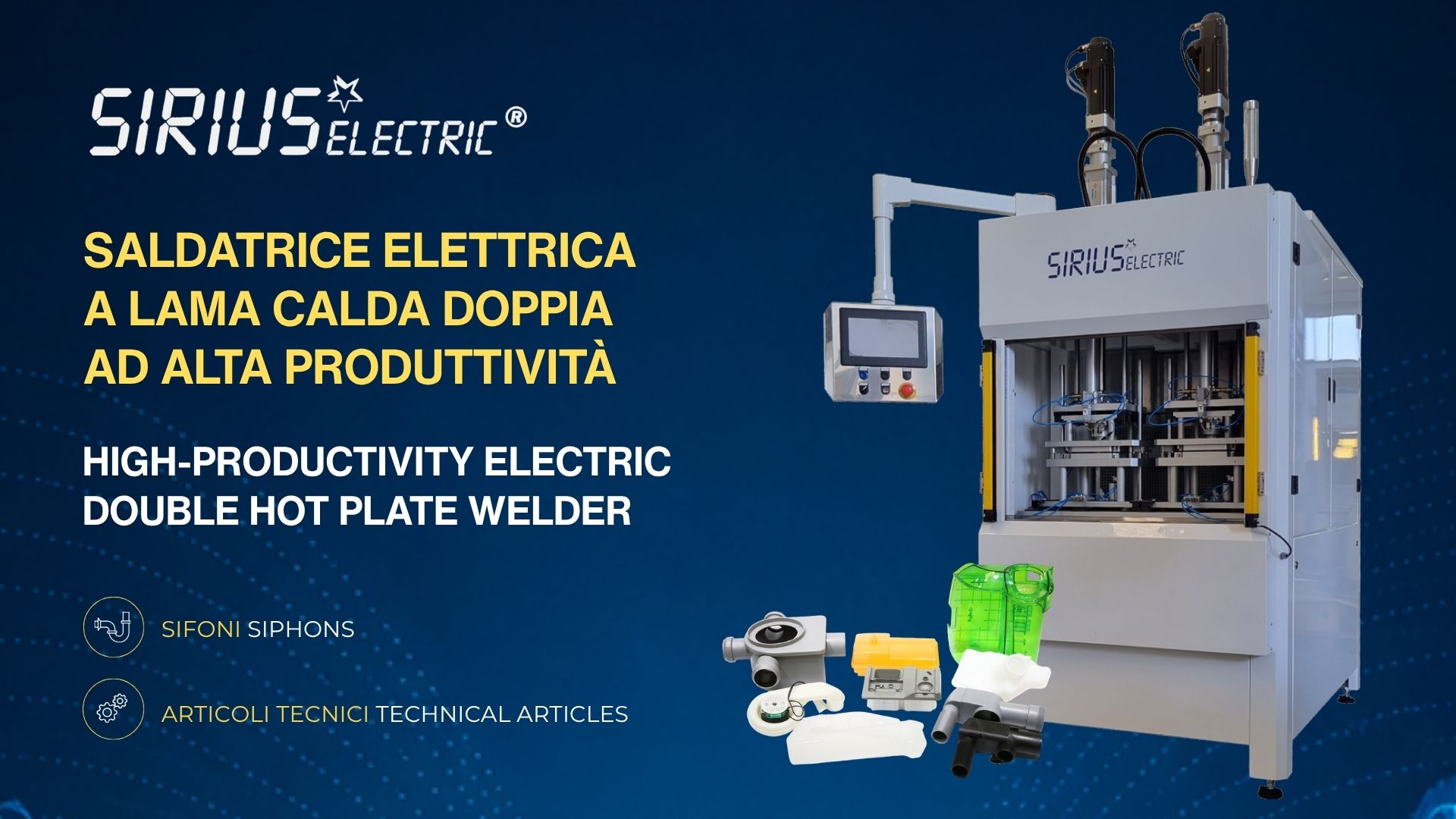
The technology showcased in the video is a Dual Electric Hot Plate Welder, a custom-engineered system designed to increase productivity and reduce cycle times. Thanks to independently controlled electric axes for both molds and heating plates, the machine offers exceptional precision, flexibility, and process control, making it ideal for demanding applications and complex geometries.
One of the key advantages of hot plate welding is its ability to produce joints with both high mechanical strength and excellent sealing performance. This makes it particularly suitable for thermoplastic materials such as polypropylene (PP) and for assemblies where leakage is simply not acceptable. Unlike some alternative technologies, hot plate welding also performs exceptionally well on medium and large-sized components.
Typical Applications of Hot Plate Welding Technology
This technology is successfully used in several industrial sectors, including:
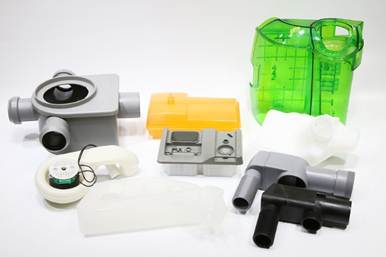
- Automotive: coolant reservoirs, brake fluid tanks, air and fluid management components.
- Household Appliances: washing machine and dishwasher tanks, technical housings and functional plastic assemblies.
- Industrial Containers and Packaging: detergent tanks and containers requiring reliable hermetic sealing.
- Construction and Plumbing: siphons, ducts, and other thermoplastic products where leak-tight performance is critical.
In an era where manufacturers demand higher quality standards, greater process stability, and increased productivity, hot plate welding deserves a place among the first technologies evaluated, not the last. For applications requiring robust, leak-proof thermoplastic assemblies, a dual electric hot plate welding system can provide an ideal combination of reliability, efficiency, and precision. Sometimes the best manufacturing solution is not the newest technology, but the one that consistently delivers the required performance. Hot plate welding is a perfect example